
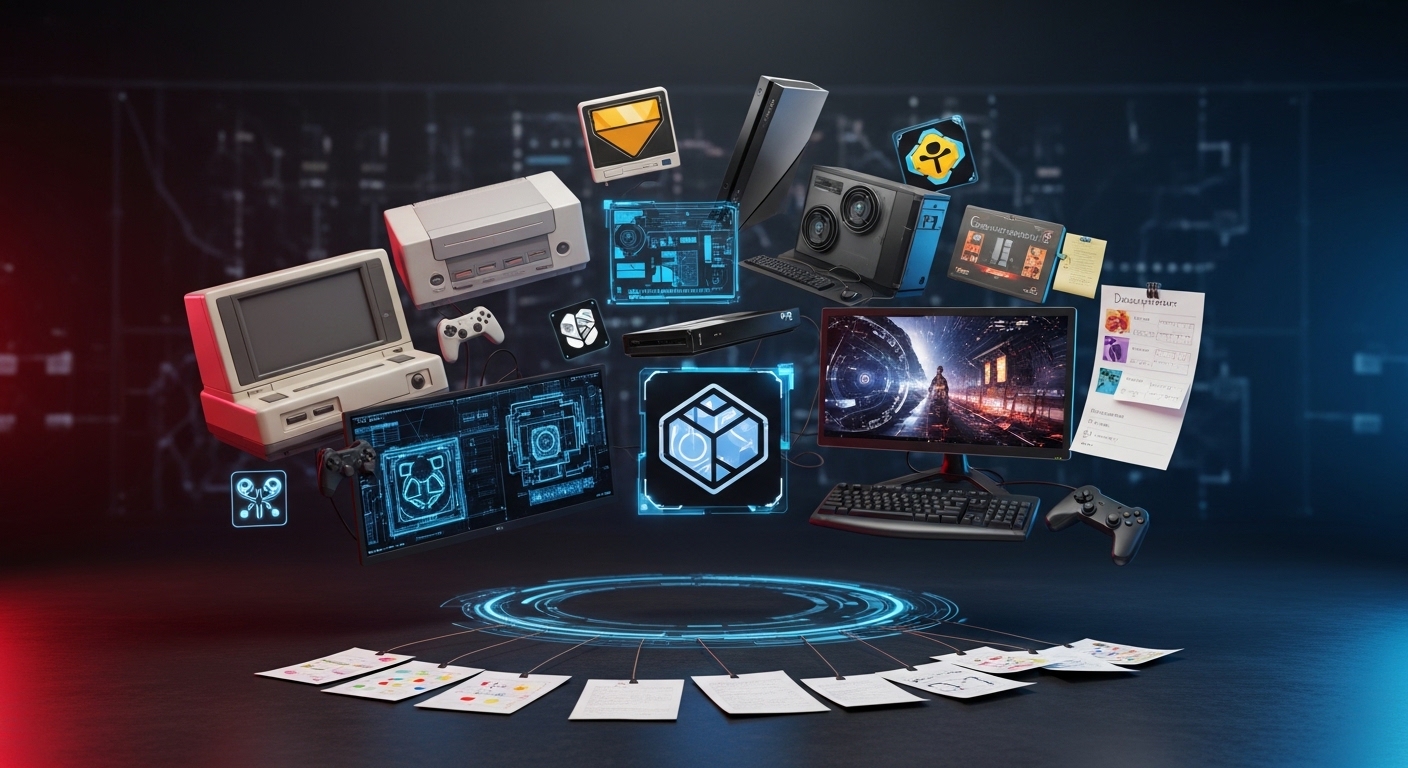
Video game preservation has never mattered more than it does today. Modern games evolve constantly—receiving patches, updates, DLC expansions, online events, and even live-service overhauls. That means the games we play today rarely resemble the original versions launched years ago.
In this fast-moving world, updates TheGameArchives has emerged as one of the most important concepts in digital preservation. It represents a shift from old-style file dumping to a structured, historically accurate method of documenting game evolution.
As the global gaming industry surpasses $184 billion in annual revenue and continues outpacing film and music, ensuring this digital history doesn’t disappear is essential. What changed in TheGameArchives in 2026 is more than a platform refresh—it’s a structural upgrade that affects players, researchers, journalists, developers, and future historians.
This comprehensive guide explores what thegamearchives updates truly mean, why the improvements matter, how modern preservation works, and what challenges the industry still faces.
What “Updates TheGameArchives” Really Means in 2026
In 2026, updates TheGameArchives no longer refers to a website refresh or UI redesign. Instead, it describes a wider ecosystem of coordinated digital preservation efforts across:
- Nonprofit organizations
- Community-led archival groups
- University research projects
- Digital libraries
- Emulator development teams
- Independent preservationists
Together, they form a global network protecting the world’s gaming heritage.
Why Modern Game Preservation Requires Continuous Updates
Unlike traditional media—books, films, vinyl—games don’t remain static. They evolve:
- An MMO might receive 200+ updates across a decade.
- A console title might launch with bugs but become a masterpiece after patches.
- Regional versions may differ due to censorship or translation changes.
- A pre-release prototype may reveal scrapped ideas never seen again.
If these variations disappear, entire chapters of game history vanish.
Dr. Andrew Borman, a leading video game historian, once stated:
“A game without its patches is rarely the same game that players actually experienced.”
That’s the core purpose behind updates TheGameArchives—preserving not just the games, but their entire evolution.
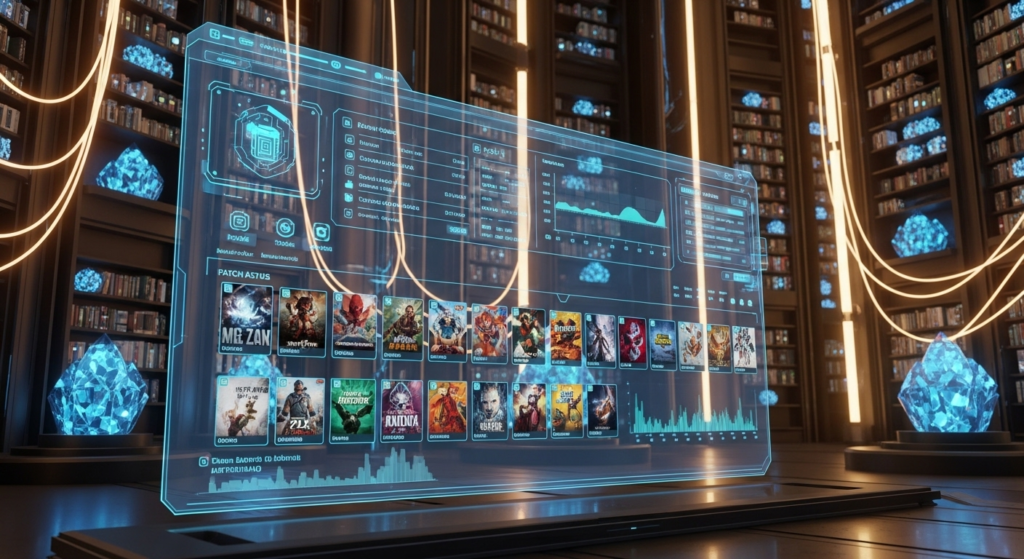
From Simple ROM Dumps to Structured Digital Archives
In the early 2000s, game “archiving” meant uploading files to forums or torrent networks. However, these early efforts came with problems:
- Missing metadata
- Corrupted files
- No version tracking
- Duplicates
- Unverified dumps
- No preservation of development materials
As the industry grew, these limitations became unacceptable. Players needed accurate, verified, and culturally meaningful records.
Today, updates TheGameArchives represents a new preservation era built on:
- Standardized metadata
- Automated file verification
- Structured archival formats
- Emulation testing
- Historical context preservation
- Searchability and filtering
- High-integrity storage
Let’s break down each major improvement.
Major Improvements Introduced by Updates TheGameArchives
1. Metadata Standardization and Better Cataloging
Metadata is the backbone of digital preservation. Without it, files become disconnected fragments.
TheGameArchives now uses structured metadata fields such as:
| Metadata Field | Purpose |
|---|---|
| Release Year | Places the game in historical timeline |
| Platform | Specifies console or PC system |
| Region | Documents global variations |
| Version Number | Tracks patches, updates, rebuilds |
| Developer | Attributes creation accurately |
| Publisher | Adds industry context |
Why this matters
- Prevents confusion between regional releases
- Helps researchers identify changes across revisions
- Ensures duplicate entries don’t clutter archives
- Improves searchability and catalog organization
In gaming preservation, metadata is as important as the file itself.
2. Automated File Verification & Checksum Systems
A single corrupted byte can make a game unplayable.
Checksum systems prevent this.
How it works:
- Each file gets a digital “fingerprint.”
- When uploaded or downloaded, the fingerprint is verified.
- If it doesn’t match, the system flags the file as corrupted or altered.
Benefits:
- Ensures authenticity
- Eliminates duplicates
- Identifies modified ROM hacks
- Verifies patch integrity
- Helps maintain clean, reliable archives
These systems are now mandatory across major preservation networks.
3. Advanced Search Algorithms and Filtering Options
Early game archives often returned incomplete or irrelevant search results.
The latest updates TheGameArchives fix this with:
Modern filtering options:
- Platform
- Release year
- Region
- Version number
- Developer
- Genre
- Patch level
For researchers, journalists, or historians, this dramatically improves usability.
4. Security Upgrades (HTTPS, Authentication, Compliance)
With millions of archived files, security is non-negotiable.
New updates include:
- HTTPS encryption
- Upload authentication
- Spam/malware detection
- Strict file validation rules
These upgrades protect both the archive and users accessing files.
Case Studies: Preservation Efforts in Action
This section explores real-world examples that highlight why updates TheGameArchives matter.
Case Study 1: PlayStation 3 Patch Preservation
The PS3 era pioneered widespread downloadable patches—but this created a huge preservation challenge.
Once Sony shuts down patch servers, these updates risk becoming lost media.
Archivists now preserve:
- Patch files
- Revision histories
- Compatibility with RPCS3
- Region-specific updates
- Digital-only builds
Without this work, major games like The Last of Us, Journey, or Gran Turismo 5 would eventually lose key features and fixes.
Case Study 2: Video Game History Foundation’s Digital Library
This nonprofit remains one of the most influential contributors to updates TheGameArchives.
They preserve materials that go far beyond playable games:
- Early design documents
- Developer notes
- Concept art
- Marketing materials
- Press kits
- Internal correspondence
- Prototype builds
These resources help historians understand why games were made the way they were.
Example:
The Foundation uncovered early design notes for Nintendo Power magazines that revealed scrapped ideas for several iconic titles.
Case Study 3: In-Game Archives — Roblox Doors “The Archives”
Modern games increasingly add archival-style content inside the game world itself.
In Roblox’s Doors, the mysterious area called The Archives holds lore records and hints at development history within the game.
This unique trend blurs the line between external archives and in-game preservation.
Case Study 4: Subscription Services and the Preservation Gap
Games in subscription services—like Space Engineers on Game Pass—aren’t permanently accessible.
Once licenses expire, games disappear.
This proves a critical point:
“Subscription access is not preservation.”
Independent archives ensure these titles remain part of gaming history.
Case Study 5: RiffTrax The Game Internal Content Archive
RiffTrax The Game showcases how modern titles maintain internal archives of:
- New movie clips
- Gameplay modes
- Platform expansions
- Voice lines
- Cinematic assets
This reinforces how preservation isn’t just external—games increasingly store evolving archives inside themselves.
Why Game Archives Must Continuously Update
To understand the importance of updates TheGameArchives, consider how dramatically games can change after release.
Examples of update-driven transformations:
- A 2012 game may now play drastically differently due to 50+ patches.
- Entire storylines were added to live-service games like Destiny or Warframe.
- Online-only games lose features forever when servers shut down.
- DLC sometimes replaces original content unavailable elsewhere.
Archiving only the launch version gives future players an incomplete—and often inaccurate—historical record.
This is why version tracking and patch preservation are now essential.
The Modern Game Preservation Ecosystem
The strength of updates TheGameArchives isn’t just in technology—it’s in collaboration.
Major contributors include:
- Nonprofit foundations
- Independent archivists
- Emulator developers
- Digital library organizations
- Gaming historians
- Academic researchers
- Modding communities
Modders often preserve update histories before developers remove them.
Players record gameplay from servers that will shut down.
Historians document revision changes across decades.
This collaborative ecosystem is the backbone of modern preservation.
Challenges That Game Archives Still Face
Despite major progress, preservation remains difficult.
1. Online-Only Games
If a game requires a server, it becomes unplayable when the server shuts down.
Examples:
- Live-service MMOs
- Multiplayer-only shooters
- Online-exclusive VR platforms
Preserving these experiences requires:
- Recording gameplay
- Preserving server configurations
- Capturing network behavior
2. Copyright and Licensing Restrictions
Strict intellectual property laws make archiving complicated.
Some publishers block preservation efforts entirely.
Archivists must navigate:
- Licensing windows
- Copyright restrictions
- Digital distribution rights
- Region-specific legal limitations
3. Large File Sizes
Modern games frequently exceed:
- 80 GB for AAA titles
- 120–150 GB after updates
- 30–50 GB in patches alone
Storing entire revision histories is a massive undertaking.
4. Lost Media & Missing Patches
Some games shipped patches that were never mirrored or documented.
Once official servers go offline, these builds risk disappearing forever.

The Future of Updates TheGameArchives
Modern preservation continues to evolve. The next decade will transform how game archives operate.
1. AI and Automated Archiving Tools
Artificial intelligence may eventually manage tasks such as:
- Automatic metadata tagging
- Patch detection
- Version comparison
- Duplicate identification
- Archive indexing
- Emulator compatibility assessment
AI will accelerate preservation efforts that currently take years.
2. Toward a Global Preservation Network
Experts predict a future where:
- Nonprofits
- Academic institutions
- Museums
- Library systems
- Community archives
…work together through connected digital preservation networks.
This unified ecosystem would ensure global accessibility and reduce duplication of effort.
3. Hybrid Archiving (In-Game + External)
Games increasingly use lore archives, encyclopedias, and codex systems internally.
Future titles may embed historical documentation directly into their world—creating a hybrid preservation model.
Why Updates TheGameArchives Matter for Everyone
1. Cultural Preservation
Video games aren’t just entertainment—they’re global cultural artifacts.
Preserving them ensures:
- Historical accuracy
- Creative heritage
- Technological evolution records
- Cultural impact studies
2. Academic & Journalist Research Opportunities
Scholars rely on archives to study:
- Game design evolution
- Player behavior patterns
- Technology shifts (2D → 3D → VR → cloud gaming)
- Cultural influence across regions
Preservation provides critical data for future research.
3. Benefits for Players
Game archives allow players to:
- Replay classic titles
- Explore discontinued content
- Study earlier patches
- Compare versions
- Experience “lost builds”
For fans of retro and modern gaming alike, archives are a time machine.
Key Takeaways: Why TheGameArchives Updates Matter in 2026 and Beyond
- Modern game preservation requires constant updates—not static snapshots.
- Metadata standardization ensures historical accuracy.
- Checksum systems prevent corruption and verify authenticity.
- Subscription services cannot replace independent archives.
- Development materials (notes, prototypes, concept art) are as valuable as playable builds.
- AI will play a major role in future preservation.
- Game preservation protects a multi-billion-dollar cultural medium for future generations.
Frequently Asked Questions (FAQ)
What are updates TheGameArchives?
They refer to the modern digital preservation upgrades—including metadata standardization, file verification, search improvements, and expanded archival initiatives.
Do archive updates remove old games?
No. They only remove corrupted or invalid files. Verified historical content remains preserved.
Why is metadata important?
Metadata identifies the correct versions of games, tracks patches, and ensures accurate historical documentation.
Are archived games always playable?
Not always. Some preservation projects focus on documentation, development archives, or non-playable builds.
Will future games be easier to archive?
Tools are improving, but online-only games still pose major challenges—so preservation will remain an evolving effort.
Final Thoughts
Updates TheGameArchives represent an important evolution in how gaming history is preserved. With new metadata systems, verification tools, internal content archives, and global collaboration, the industry now treats game preservation with museum-level seriousness.
As games evolve—and sometimes disappear—the work of archivists ensures that future generations can understand, study, and experience digital history exactly as it happened.
