
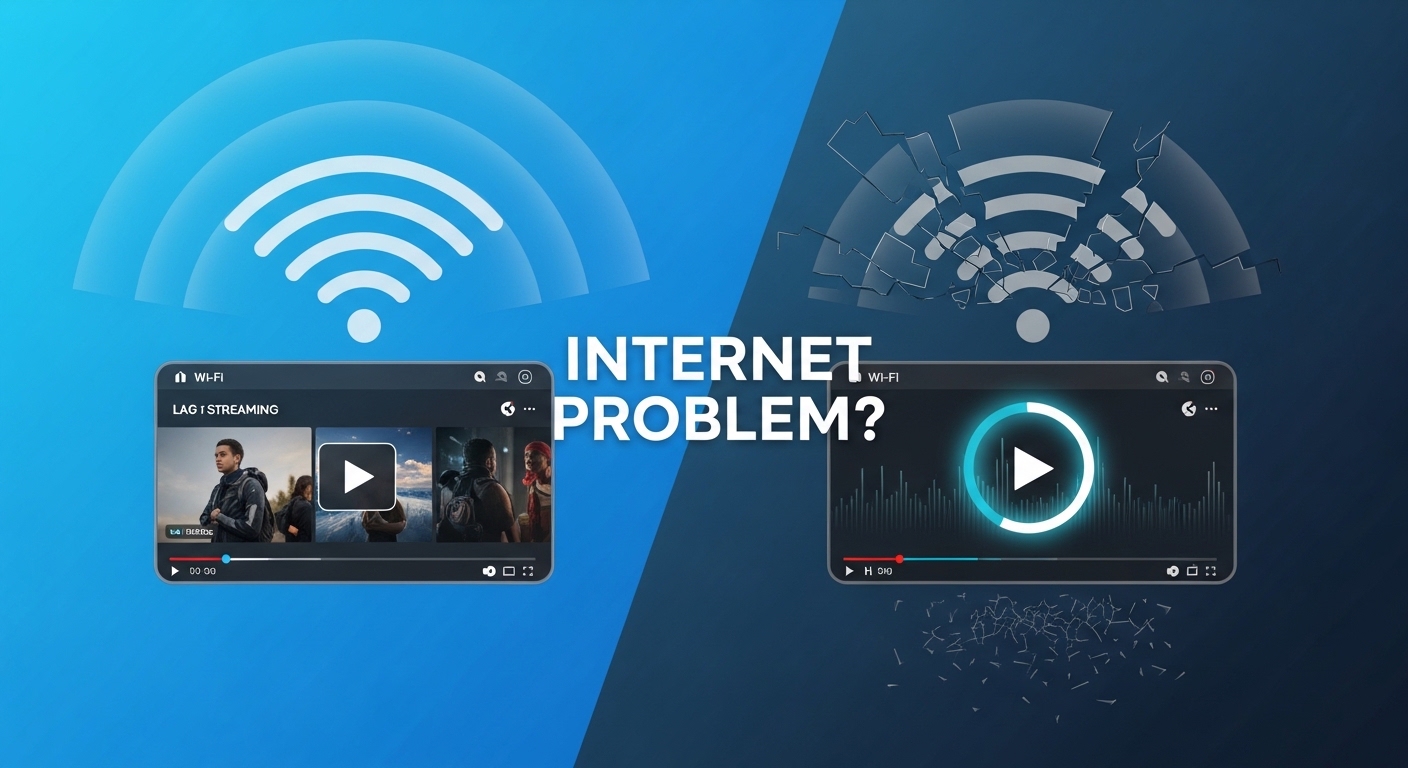
What Are Internet Chocks, Really?
An internet chock happens when your connection suddenly slows down or becomes unstable, but without a complete outage. It feels like your internet “freezes” for a few seconds or struggles to load data properly.
Think of it like a highway where multiple lanes suddenly merge into one. Data packets get delayed, network congestion builds up, and everything slows down. This leads to issues like buffering, lag in online games, and dropped video calls.
In simple terms, internet chocks occur when your network cannot handle the amount of data being used at that moment—whether due to your device, your ISP (Internet Service Provider), or external interference.
Why Internet Chocks Happen — The Real Causes
Internet chocks usually happen due to multiple combined factors rather than a single issue.
One of the most common reasons is network congestion. During peak hours, many users share the same bandwidth, causing slow speeds and buffering issues.
Another major cause is ISP throttling, where your Internet Service Provider intentionally reduces your speed after you exceed usage limits or during heavy traffic periods. This leads to poor internet performance even if your plan is high-speed.
Your hardware can also cause problems. An outdated router, missing firmware updates, or weak signal strength can lead to unstable connectivity. Physical barriers like walls and interference from devices such as microwaves can also reduce Wi-Fi quality.
Weather conditions can impact satellite and rural connections, causing packet loss, high latency, and unstable signals.
Main Causes of Internet Chocks
| Cause | Impact | Result |
|---|---|---|
| Network Congestion | Shared bandwidth usage | Slow speeds during peak hours |
| ISP Throttling | Speed limitation by provider | Buffering and lag |
| Outdated Router | Poor hardware performance | Connection drops |
| Firmware Issues | Missing updates | Instability |
| Wi-Fi Interference | Signal disruption | Weak coverage |
| Weather Conditions | External disruption | Packet loss |
How Internet Chocks Affect Your Digital Life
Internet chocks can disrupt almost every online activity.
For remote workers, they can freeze video calls, interrupt file uploads, and break communication tools. As gamers, they cause lag and unstable gameplay. For families, streaming interruptions ruin entertainment experiences.
Businesses lose productivity, students face learning disruptions, and freelancers miss deadlines. Even short connection issues can lead to stress and frustration.
In today’s world, a stable internet connection is essential for work, communication, and entertainment.
How to Diagnose Internet Chocks Quickly
Before assuming the problem is with your ISP, you should test your setup.
Start by restarting your router and modem. This clears temporary glitches.
Check your router lights. If they are blinking abnormally or showing red signals, there may be a connectivity issue.
Run a speed test and compare it with your internet plan. If speeds are consistently lower, you may be experiencing throttling or congestion.
Try using an Ethernet cable. If performance improves, the issue is likely Wi-Fi interference.
Finally, check for firmware updates in your router settings. Outdated firmware often causes instability.
Proven Fixes to Prevent Internet Chocks
Optimize Router Placement
Place your router in a central, elevated location to improve signal strength and reduce interference.
Upgrade Your Equipment
Older routers should be replaced with modern Wi-Fi 6 routers or mesh systems for better performance.
Enable QoS Settings
Quality of Service (QoS) prioritizes important traffic like video calls and gaming.
Use Ethernet Connections
Wired connections are more stable and eliminate Wi-Fi interference.
Limit Heavy Usage
Avoid streaming, downloading, and gaming all at once.
Use Wi-Fi Extenders
Extenders or mesh systems help eliminate dead zones in larger homes.
Contact Your ISP
If issues continue, check for throttling, data caps, or service problems.
Change DNS Settings
Switching to faster DNS servers like Google or Cloudflare can improve speed.
Advanced Tips for Better Internet Performance
For even better performance, reduce the number of connected devices and prioritize essential tasks.
Upgrade to Wi-Fi 6 for better multi-device handling and lower latency.
Avoid heavy usage during peak hours if your area experiences congestion.
Bandwidth optimization is not just about speed—it’s about stability and balance across all devices.
The Broader Impact of Internet Chocks
Internet chocks don’t just affect individuals—they impact entire industries.
Businesses lose customers during downtime, healthcare systems face delays in telemedicine, and students struggle with online learning.
As society becomes more dependent on digital systems, even small interruptions can have large consequences.
FAQs About Internet Chocks
1. What are internet chocks?
They are sudden slowdowns or interruptions in your internet connection caused by congestion, interference, or throttling.
2. Why does my internet keep freezing?
It may be due to overloaded networks, weak Wi-Fi, or ISP limitations.
3. Can ISP throttling be avoided?
Sometimes using a VPN or upgrading your plan can reduce throttling effects.
4. Why is my Wi-Fi unstable?
It could be router issues, interference, or outdated firmware.
5. Do internet chocks affect mobile data?
Yes, mobile networks can also experience congestion in crowded areas.
Final Thoughts
Internet chocks are frustrating, but they are not permanent problems. With proper setup, updated hardware, and smart network management, you can greatly reduce or even eliminate them.
A stable internet connection is no longer optional—it is essential for modern life. By optimizing your network and understanding the causes, you can enjoy smooth browsing, streaming, and communication without interruptions.
